
AI Teacher for Homework Help: Learn the Answer, Don’t Just Copy It
Staring at a homework problem at 9 p.m. with no one to ask is the moment most students give up — or copy an answer they don’t understand. An AI teacher changes that: instead of dumping a final answer, it sits with you like a patient tutor, breaks the problem into steps, and asks the questions that help you get there yourself. According to Wikipedia’s entry on intelligent tutoring systems, that kind of adaptive, feedback-driven instruction is the defining feature that separates true tutoring software from a plain answer key.
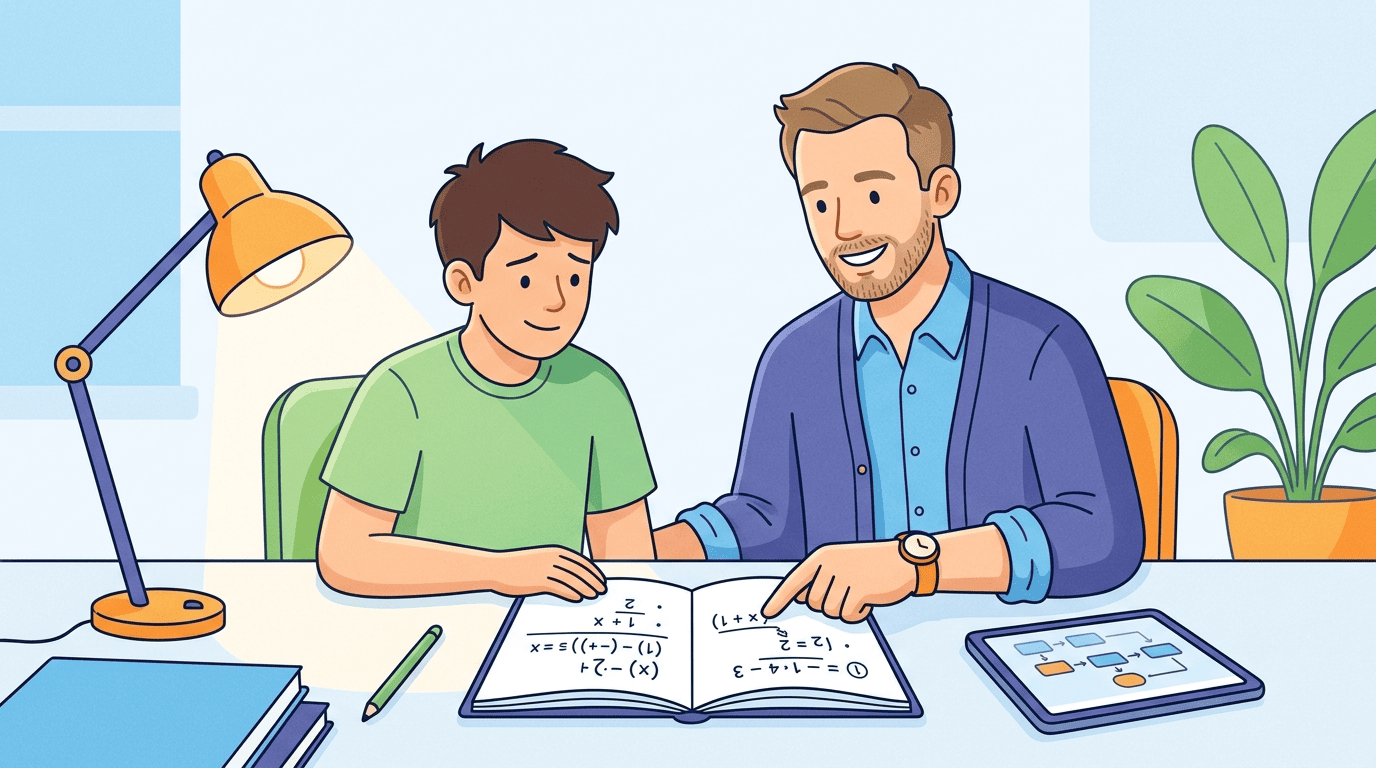
This guide explains what an AI teacher for homework help actually is, how the good ones teach instead of just solving, what subjects they cover, whether it counts as cheating, and what the research says about whether it works.
What an AI Teacher for Homework Help Actually Is
An AI teacher — also called an AI tutor, personal AI tutor, or AI learning companion — is a chat-based teaching assistant built on large language models. Unlike a plain search engine or a bare “homework solver,” a well-built AI teacher is designed to explain and coach a student through a problem rather than just hand over the result. Some tools go further and behave like a full intelligent tutoring system, adapting the explanation to how the student responds at each step.
From “answer machine” to a tutor that teaches
Tools in this category are typically powered by GPT-4-class large language models, and several advertise broad academic coverage — one popular AI study buddy claims over 100 subjects spanning 1st grade through master’s-level coursework. What separates an AI study buddy from a search bar is intent: the model is prompted and constrained to teach, not just to answer. In practice, that shows up as a handful of recurring features across the category:
- A chat interface that keeps asking questions instead of closing the conversation with one answer
- Photo or PDF upload with OCR, so a handwritten worksheet becomes text the model can read
- Coverage that spans multiple subjects rather than one narrow niche
- Session memory, so the tutor can reference a step from earlier in the same problem
The key split in the market: solve vs. teach
Some homework tools race to spit out a final answer in “milliseconds.” The better category of tools deliberately holds the answer back and walks the student through the reasoning instead. That difference is the whole point of a personal AI tutor, and it’s the line this guide keeps coming back to.
| Approach | What the student gets first | Long-term effect |
|---|---|---|
| Solve-first tool | The finished answer, instantly | Faster homework, weaker understanding |
| Teach-first AI teacher | A guiding question or the first step | Slower per problem, understanding that carries to the test |
How It Walks You Through Homework, Step by Step
Getting help follows a predictable shape across most AI homework helpers, whether the input is typed, pasted, or scanned from a notebook page.
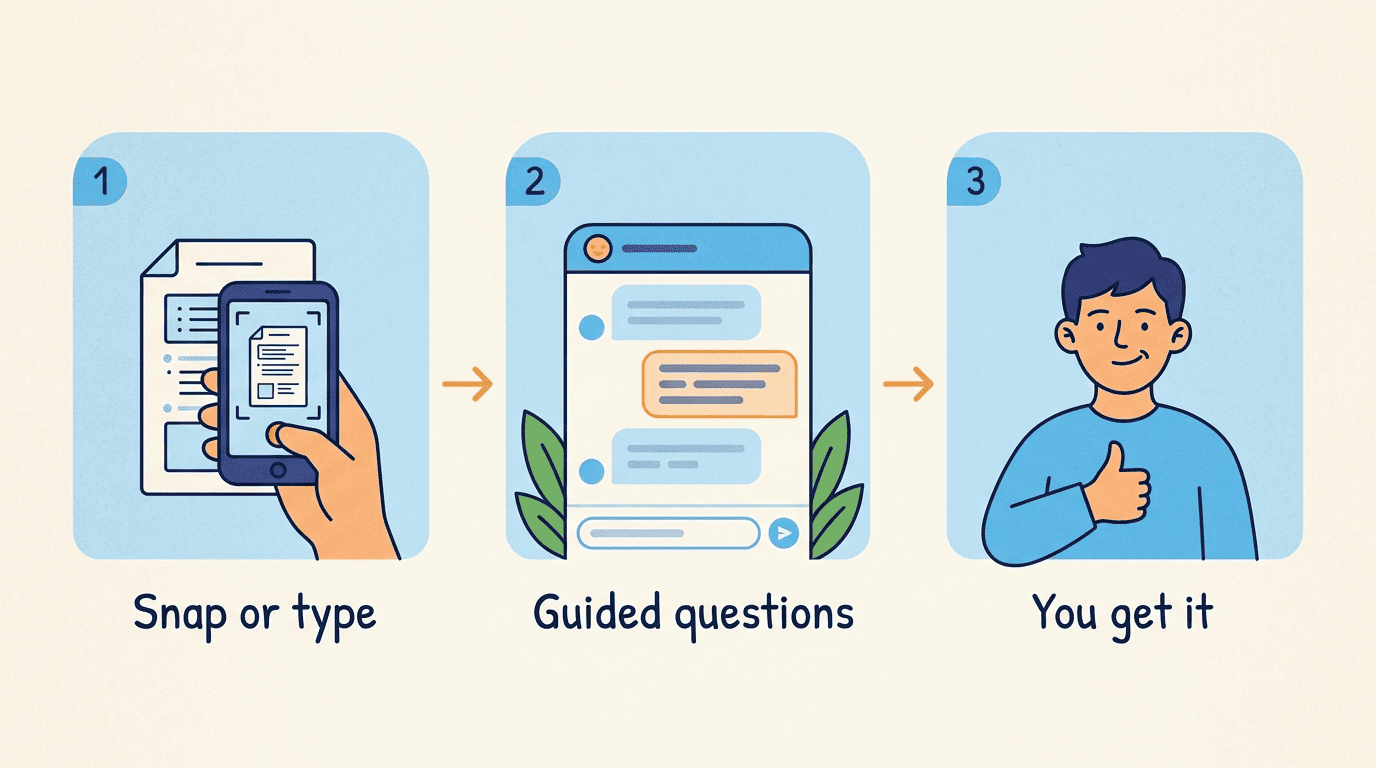
Ask, snap, or paste your problem
You type a question, paste it, or upload a photo or PDF — optical character recognition (OCR) reads even handwritten problems in many tools. Within seconds, the AI teacher online responds with an opening question or the first step, rather than the finished answer.
Guided questioning instead of a handed-over answer
The Socratic approach means the tutor asks something like “What do you think the first step is?” and nudges when a student is stuck, instead of solving the problem outright. Students end up understanding the “why,” not just copying a result, which is what separates learning from cheating. A typical guided-questioning exchange includes:
- An opening question about the first move, instead of the answer itself
- A smaller hint or sub-question when the student is stuck
- A check on the reasoning before the tutor moves to the next step
- A “why” prompt if the student’s answer is right but the logic is shaky
- A similar practice problem at the end to confirm the method actually stuck
Which Subjects an AI Teacher Covers
Subject coverage is one of the biggest differences between a narrow “math-only” app and a genuine step-by-step AI tutor meant to handle a whole course load.
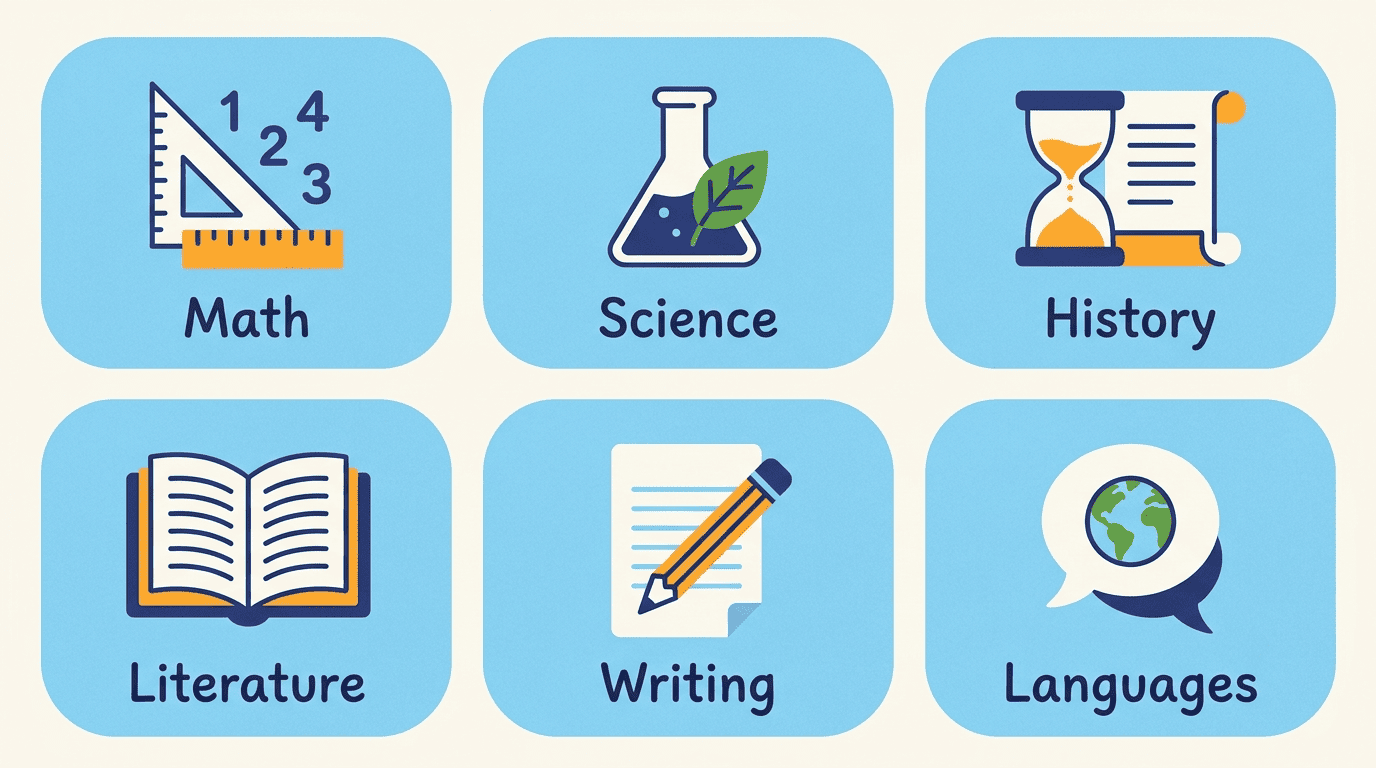
Core subjects
Math (arithmetic through calculus), the sciences (biology, chemistry, physics), humanities (history, literature), writing, and world languages are standard across the leading tools. Some AI homework helpers extend from middle school through college, including Advanced Placement, honors, International Baccalaureate, and even college-level organic chemistry. The subject list itself tends to fall into a few recognizable buckets:
- Math: arithmetic, algebra, geometry, trigonometry, calculus, statistics
- Sciences: biology, chemistry (including organic chemistry), physics
- Humanities and writing: history, literature, essay structure and editing
- Languages: vocabulary, grammar, and translation practice
| Level | Typical subjects covered | Common tool behavior |
|---|---|---|
| Elementary / middle school | Arithmetic, basic science, reading comprehension | Simple guided questions, heavy scaffolding |
| High school | Algebra, geometry, biology, chemistry, physics, essay writing | Step-by-step with AP/honors variants |
| College | Calculus, statistics, organic chemistry, humanities, writing | Deeper explanations, citation and source support |
Is Using an AI Teacher Cheating?
Academic integrity is the question every student and parent eventually asks, and the honest answer depends entirely on how the tool is used.
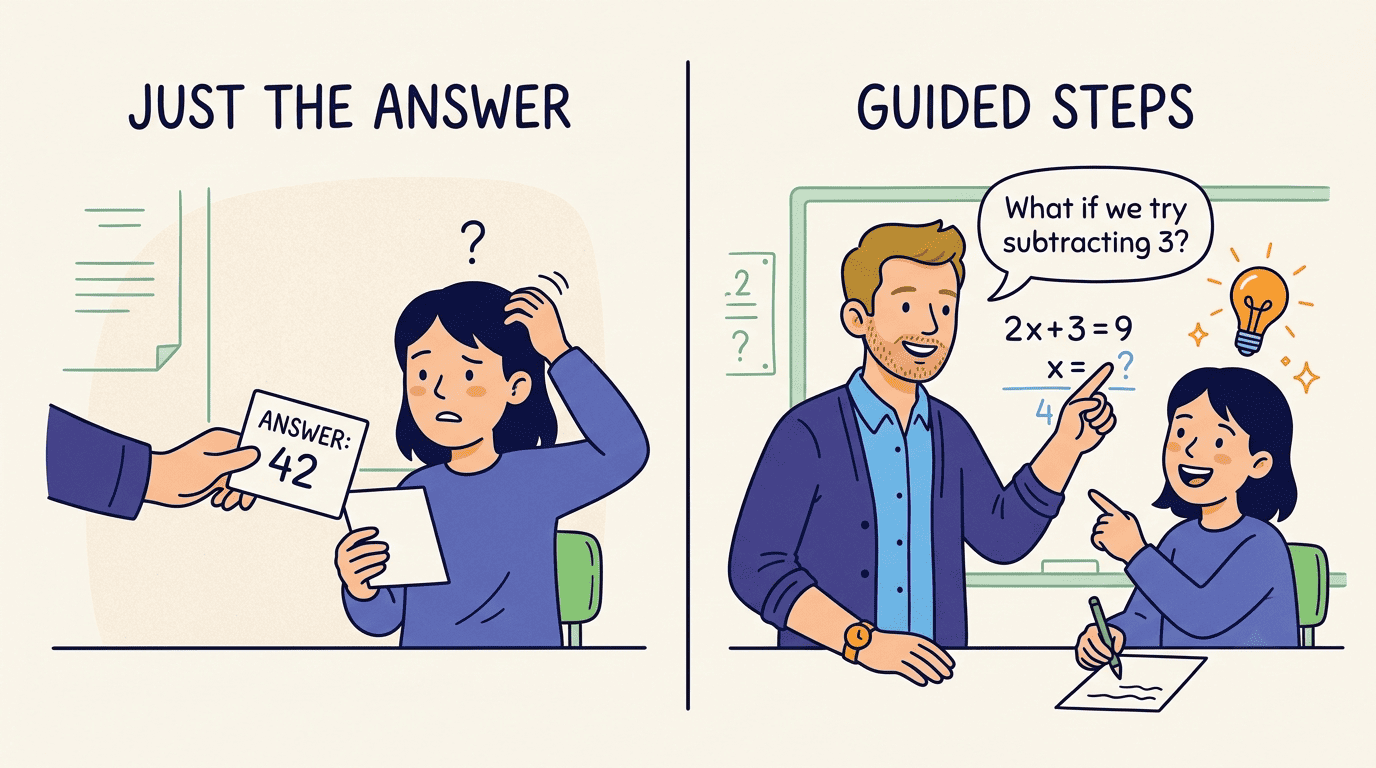
Using an AI teacher to understand a problem, check your work, and learn the method is legitimate study support — no different from asking a human tutor. Copy-pasting a generated answer you can’t explain is the shortcut teachers warn about, and it’s also the fastest way to fail the next test on the same topic. Good AI teachers are built to keep students on the right side of that line by coaching rather than answering, and by asking students to attempt each step before revealing it. A rough way to tell the two apart:
- Legitimate use: asking the tutor to explain a step you got wrong, then redoing the problem yourself
- Legitimate use: checking a finished answer against the tutor’s explanation before submitting
- Shortcut: pasting the exact homework question and copying the output verbatim
- Shortcut: submitting work you couldn’t reproduce or explain without the tool open
Access alone is insufficient; implementation and human support matter for promoting meaningful engagement with AI-based learning tools.
Stanford National Student Support Accelerator
Does It Actually Help You Learn? What the Research Says
Research on AI tutoring is encouraging but nuanced, and it’s worth reading past the marketing claims before deciding how much to lean on any single tool.
A Stanford National Student Support Accelerator study found that simply giving students access to an AI tutor doesn’t automatically boost engagement — pairing it with human support does. A related Stanford analysis found AI assistance raised lower-rated tutors’ math results by up to roughly 9 percentage points, suggesting the technology helps most when it’s lifting the weakest instruction rather than replacing strong instruction. A peer-reviewed systematic review indexed by the National Institutes of Health reports that intelligent tutoring systems have generally positive but mitigated effects on K-12 learning — a clear edge over traditional instruction, though gains shrink when compared against non-intelligent tutoring alternatives.
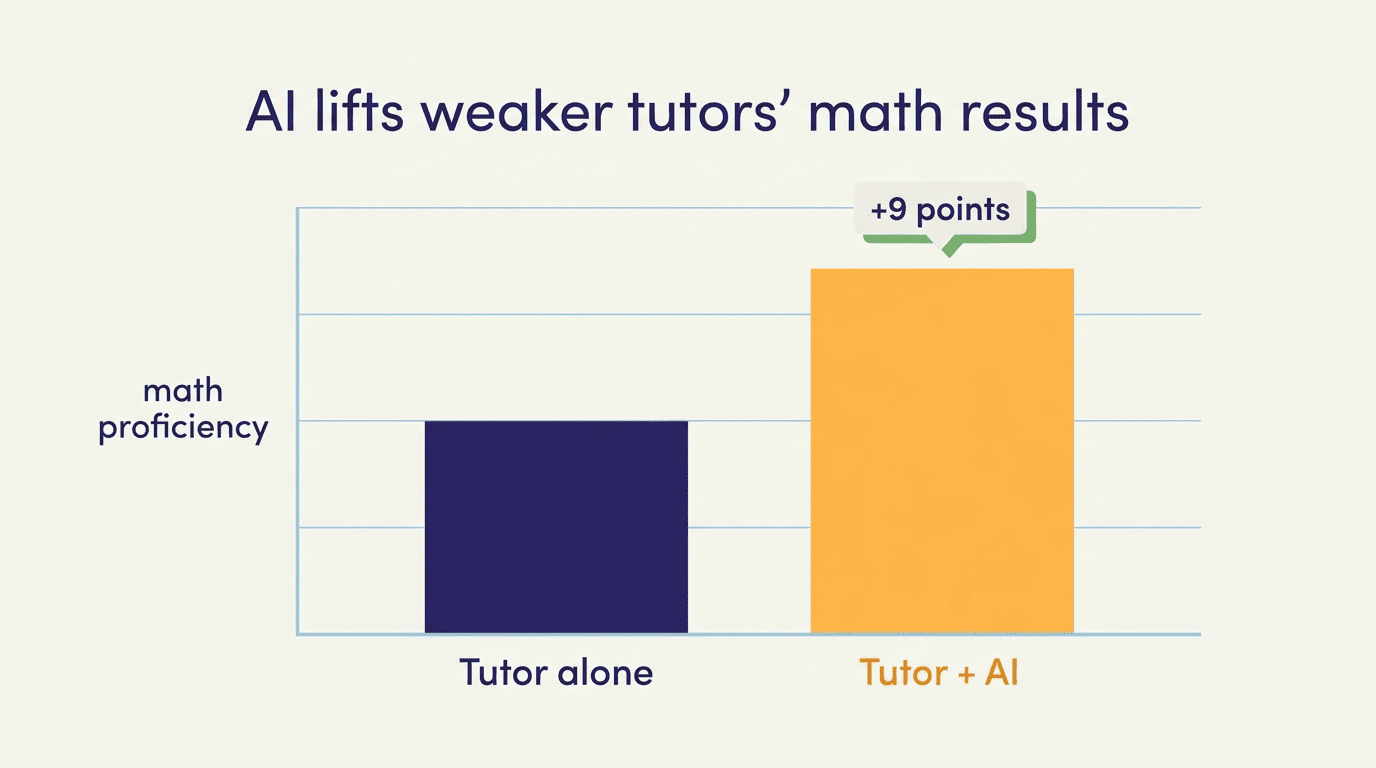
The honest takeaway across these sources: an AI teacher is a genuinely useful study partner, best used to build understanding rather than replace effort or a real teacher.
How to Start Using a Personal AI Teacher Tonight
Getting set up takes less time than finding a study partner online, and most tools let a student start without any account at all.
Three steps
- Open your personal AI teacher and pick the subject.
- Type or upload the exact problem you’re stuck on.
- Work through the guided steps — answer its questions, ask “why” when unsure, and redo a similar problem to lock it in.
Because a personal AI teacher is available 24/7, the 9 p.m. wall stops being a dead end. There’s no appointment to book and no tutor to wait on — just the next guiding question, whenever the question comes up.